Your IPR Can Now Be Denied Before Anyone Reads Your Prior Art
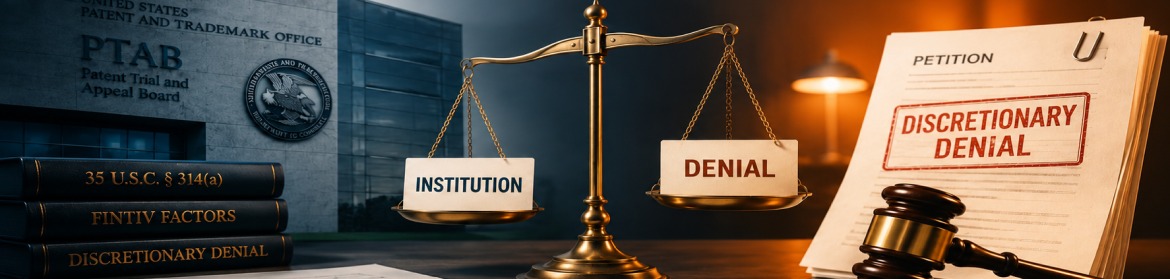
Something shifted in 2025. When a company gets sued and wants to challenge the patent at the Patent Office (an IPR), the board can now say "no" before it ever looks at the prior art. Not because the art was weak, because of timing, because a court case is already running, or because the challenger waited too long to act. Strong challenges, with good art behind them, are being turned away on procedure alone.
First, what actually changed
There used to be one basic question at the start of a patent challenge: is the prior art strong enough to get a hearing? If yes, you got your hearing.
Now there's a question that comes before that one. Even when the art is strong, the Patent Office can decide it simply won't take the case, usually because a court is already handling the same dispute and moving faster, or because the challenger sat on the patent too long before acting. This is called a discretionary denial: a "no" that has nothing to do with whether the patent is actually good, and everything to do with timing and circumstances around it.
It matters because a denial here isn't a loss on the merits, it's a refusal to even look. The client is sent back to court with no backup from the Patent Office, after spending the time and money to file. And these denials went from rare to common almost overnight: through 2025, more challenges were turned away on this basis than were let through.
A lot of that is a problem for the lawyers, and we won't pretend otherwise. Trial dates, court schedules, whether a case gets paused, those are litigation calls, not search calls. We can't fix a calendar.
But here's the part most people miss: a real slice of that risk is decided inside the search itself. And that slice has always been ours to get right.
1. The Merits Are Now the Second Question
Institution used to be one decision by one panel. It is now two gates, decided in sequence, and the gate your prior art lives behind is the one decided last.
Gate 1 is discretionary review. The Director weighs §314(a) Fintiv factors, §325(d) exposure, and settled expectations, on separate, dedicated briefing filed by the patent owner within two months of the petition.
Gate 2 is the merits. Only if the petition survives Gate 1 does anyone evaluate whether the prior art actually invalidates the claims.
A denial at Gate 1 is not a ruling that the patent is valid. It is worse, in a way: it is a refusal to look. The client is returned to district court with no PTAB backstop, having spent the petition budget and burned the calendar.
2. How an iCuerious analyst works through this
Four things sit at the center of every litigation search we run.
We move fast, on purpose. The earlier a challenge is filed, the better its odds of being heard. So our job isn't only to search well, it's to search well on a clock. A brilliant reference that lands too late to file early can be worth less than a solid one that lands in time. We build the work around that deadline from day one, not the other way around.
We look for what the examiner never saw. If we hand over art that's too close to what was already considered when the patent was first granted, it's easy to wave away. So before anything goes into a report, our analyst reads the full record of how the patent was examined, everything the examiner had in front of them, and then deliberately hunts for what's missing from it. A reference matters not because it's rare, but because it shows something the examiner never got to see.
We chase the single knockout first. One document that shows the whole invention already existed is far harder to argue with than five documents stitched together into a "well, it was obvious" story. We go after that clean, single hit before we ever settle for a combination, and when we do combine, we keep it tight and self-explaining.
We bring something different from what's already in court. If our art just repeats what's already been argued in the lawsuit, it adds little. When it opens a new, stronger line of attack, it does real work. So we search to add to the fight, not echo it.
3. The Search Brief Has Changed
The old instruction — "find us the best art on these claims" — now leaves both money and risk on the table. The brief that fits the current regime reads differently:
Find us art the examiner never saw, prioritized for anticipation, distinct from the district court contentions, delivered early enough to file early.
The bottom line — what every analyst should carry into a matter
The search stopped being a back-room task that feeds the lawyers later. It is now the first thing that decides whether a challenge gets a hearing at all. That raises the stakes on exactly the things we already do well: move fast, find what the examiner missed, favor one clean knockout over a shaky stack, and bring an angle the court case doesn't already have.
None of this is a new playbook for us. It's the same standard, held with more conviction, because the cost of a slow or shallow search is higher now than it has ever been.
And when we get it right, the client walks away with the same thing they came to us for, then and now: prior art that actually matters to their fight, ready at the moment they need it.