Lateral Search Strategies to Discover Hidden Prior Art

The strongest prior-art searches rarely depend on claim keywords alone. Here are five lateral strategies that can uncover relevant references that conventional searches may miss.
By the iCuerious Research Team
A general prior-art search typically begins with the language of the claim: key phrases are extracted, keywords are searched, and classification filters are applied. While this approach is essential, it can leave significant gaps.
Patent terminology evolves. Classification systems change. Different jurisdictions use different terminology. And the same technical problem may be solved in completely different industries.
A strong prior-art assessment therefore requires lateral searching moving beyond the exact language, classification, and technical context of the target patent to identify alternative paths to the same underlying disclosure.
When keywords fail, change the perspective-not the objective.
Below are key strategies that can help uncover hidden, overlooked, or difficult-to-find prior art.
Cross-Domain and Industry-Based Search Expansion
A general prior-art search may remain confined to the industry, sector, or technical domain identified in the target patent. This approach can overlook relevant references because the same underlying technical problem may arise across multiple industries, with each field using different terminology, system architectures, and implementation techniques.
A comprehensive search should therefore identify all industries, sectors, and technical domains that address the same or substantially similar technical problem and review each domain independently. This expands the search beyond the immediate field of the target patent and increases the likelihood of identifying references that may not use the terminology or classifications associated with the claimed invention.
The key question is not simply “Where is this invention used?”, but rather:
“Where else is the same underlying technical problem solved using a similar functional architecture?”
Once the underlying functionality is identified, the researcher can translate the claim into domain-neutral technical concepts and search for those concepts across adjacent or unrelated industries.
Worked example: Cross-Domain Search for Electronic Receipt Delivery
An illustrative example based on Target Patent A and the identification of analogous electronic-document delivery systems across retail, e-commerce, banking, and other transaction-processing domains.
| Claim limitation | Cross-domain functional concept | Search Evidence |
|---|---|---|
| 13. The method of claim 1, further comprising generating XML data and transmitting the XML data to the server, wherein the XML data includes the transaction data, the correct e-mail address of the customer and a file name corresponding to the image data. | POS-based generation and transmission of a
structured XML transaction/receipt record containing multiple related data
elements, including transaction information, customer/destination
information, and an identifier corresponding to associated image data.
From a cross-domain perspective, this can be abstracted as: transaction data + customer-specific destination information + image/file identifier -> structured XML data -> transmission to a remote server/service. |
Reference A-1: [Para 0114] “Describes taking an XML work document and an image and combining the elements into an XML-formatted receipt document.” [Para 0116] “Describes an XML document representing the work performed being passed to the Web Receipt Service.” [Para 0151] “Describes the XML structure of the receipt and the incorporation of XML or binary data within the XML document.” |
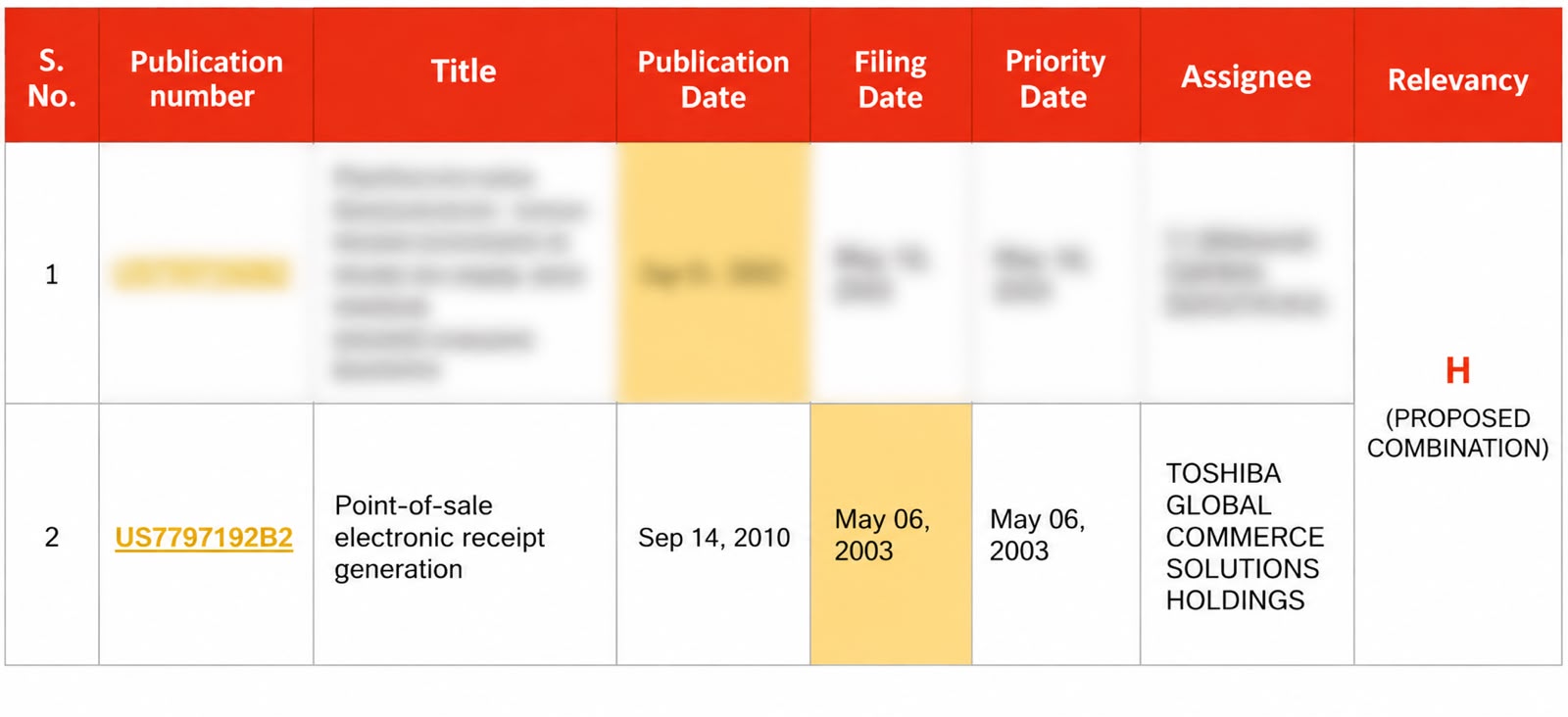
Figure 1.1 presents an overview table of Target Patent A, highlighting the relevant prior-art reference A-1 identified from a different technical domain.
Applying this functional decomposition expanded the search beyond the immediate POS receipt domain and uncovered references from adjacent technical areas. For example, Reference A-1 describes a Web Receipt Service in which transaction or work-related information is transmitted to a remote service and used to generate an electronic receipt.
Search Insight: The industry in which a claim is implemented should not define the boundaries of the prior-art search.
Research Paper–Patent Cross-Searching Strategy
A robust prior-art assessment should not treat patent literature and non-patent literature (NPL) as isolated search environments. In many technology areas, research progresses through a combination of academic publications, patent filings, conference presentations, technical reports, and industry disclosures. As a result, substantially similar technical subject matter may appear in different sources, often with significant differences in terminology, level of detail, and presentation.
A particularly effective approach is to establish a bidirectional relationship between research publications and patent records. Once a technically relevant research paper is identified, the authors should be investigated as potential patent inventors. Their names, institutional affiliations, research laboratories, co-authors, and associated technical terminology can then be searched across patent databases. Conversely, when a potentially relevant patent is identified, its inventors and associated organizations should be traced through scholarly databases to identify earlier journal articles, conference papers, dissertations, theses, technical reports, or presentations addressing the same technical subject matter.
The central search question should be:
Where else, and by whom, was the underlying technical concept disclosed before the relevant patent date?
This approach moves the investigation beyond simple keyword matching. Instead of searching only for the terminology used in the patent, the researcher identifies the underlying technical contribution and follows that contribution across different publication channels.
Worked example: Research Paper <-> Patent Cross-Searching
An illustrative example based on Target Patent B-1 and Target Patent B-2, demonstrating how patent inventors, research authors, technical concepts, and related patent or academic publications can be cross-searched to identify earlier or otherwise overlooked disclosures.
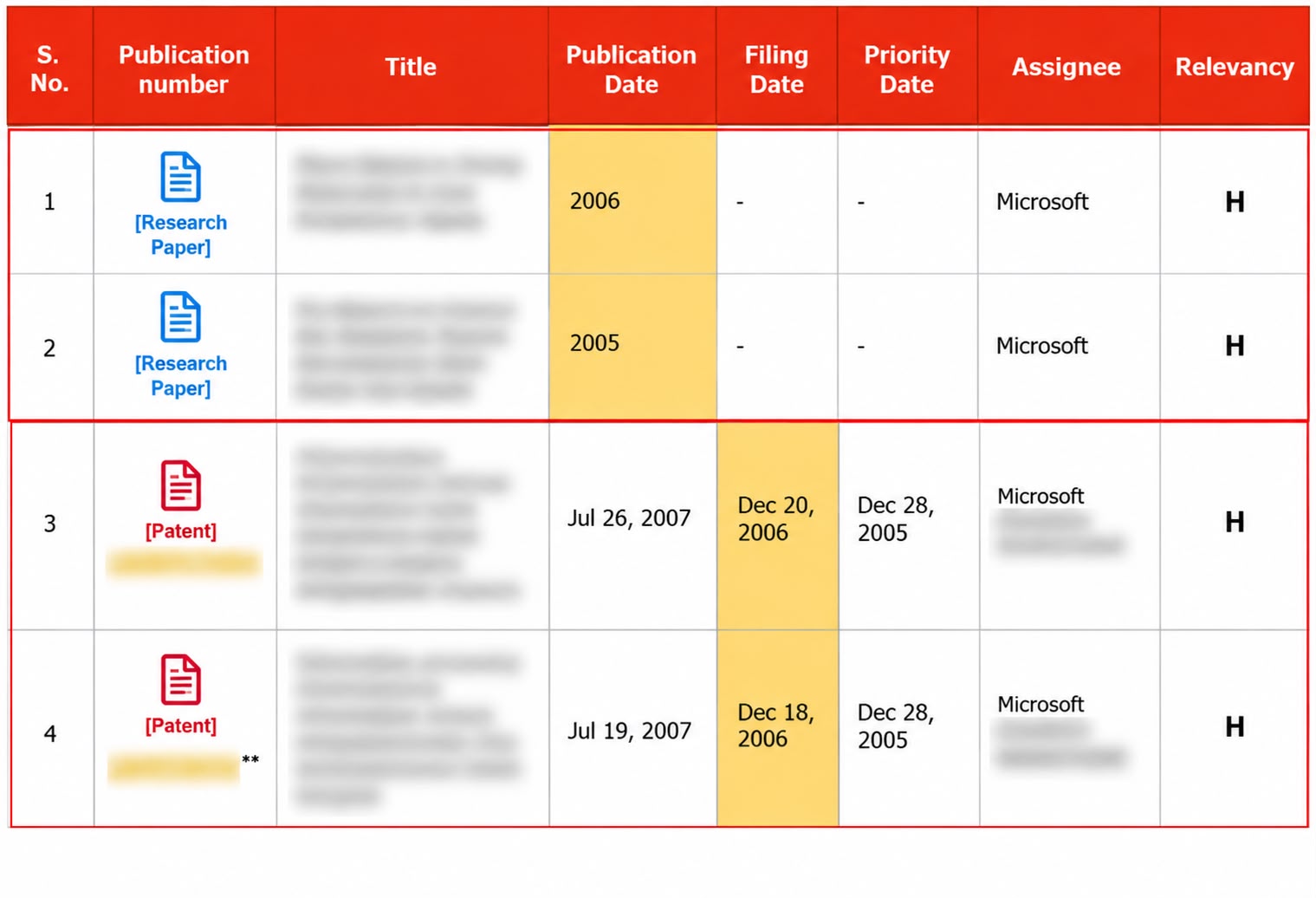
Figure 2.1 presents an overview table of Target Patent B-1, highlighting the relevant prior-art reference identified through research paper and patent cross-searching.
For Target Patent B-1, the initial search identified an earlier product disclosure such as the Sony Mylo documentation. Rather than treating the identified product reference as the endpoint of the investigation, the disclosure can be used as a search bridge to uncover related patent publications addressing the same or substantially similar technical functionality.
This approach led to the identification of US20070173291A1 and US20070168425A1, providing additional patent disclosures that can be evaluated for substantive overlap with the target claim.
Search Insight: The prior-art searching should be iterative rather than linear. Once a technically relevant reference is discovered, its products, inventors, applicants, terminology, cited references, patent families, and associated technical disclosures should become additional search pathways.
Trend-Based and Historical Technology Analysis
Technology and terminology evolve over time. A technical concept described using the claim language may have been expressed differently in earlier patents and technical literature, even where the underlying technical functionality remained substantially the same.
Trend-based analysis therefore involves studying how the relevant technology developed across different time periods and identifying the terminology, system architectures, technical approaches, and implementation techniques used during each stage of that development. This historical progression can reveal earlier references that may not be discoverable through searches based solely on the terminology used in the present-day claims.
Worked example: Trend-Based and Historical Technology Analysis
An illustrative example based on Target Patent C, demonstrating how the evolution of the claimed technology can be traced across different time periods by identifying earlier terminology, predecessor architectures, and historically equivalent technical implementations.
The key question is:
How was the technical concept claimed in Target Patent C described, implemented, or referred to in earlier generations of the technology, and which leading industry players were actively developing such technologies during those periods?
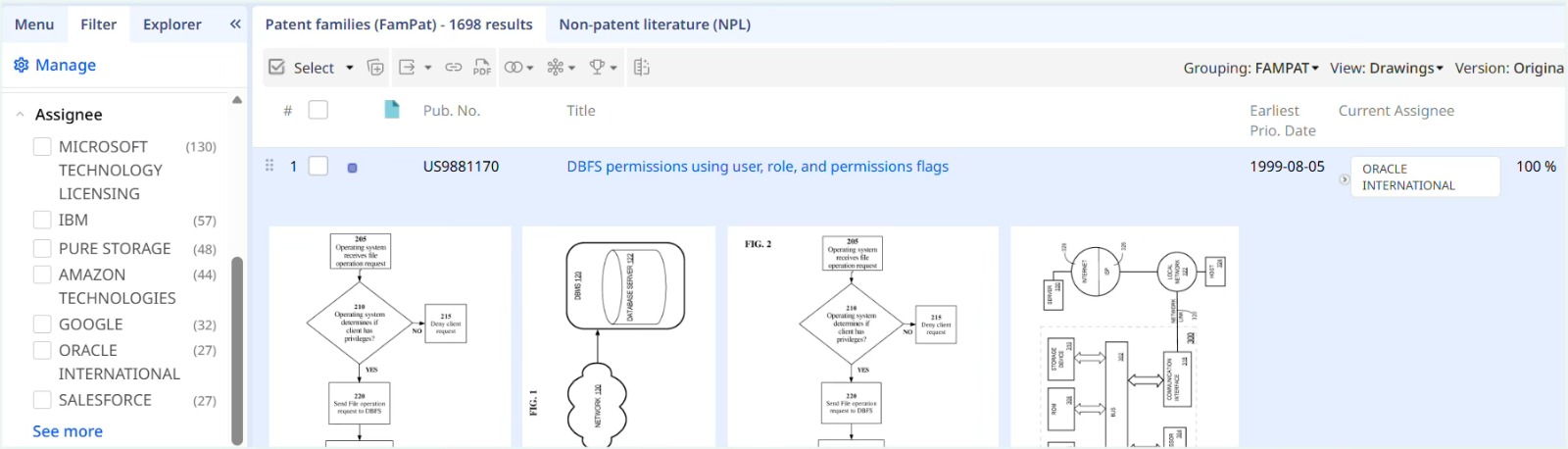
Figure 3.1 presents the key assignees actively developing the defined technologies during the relevant periods.
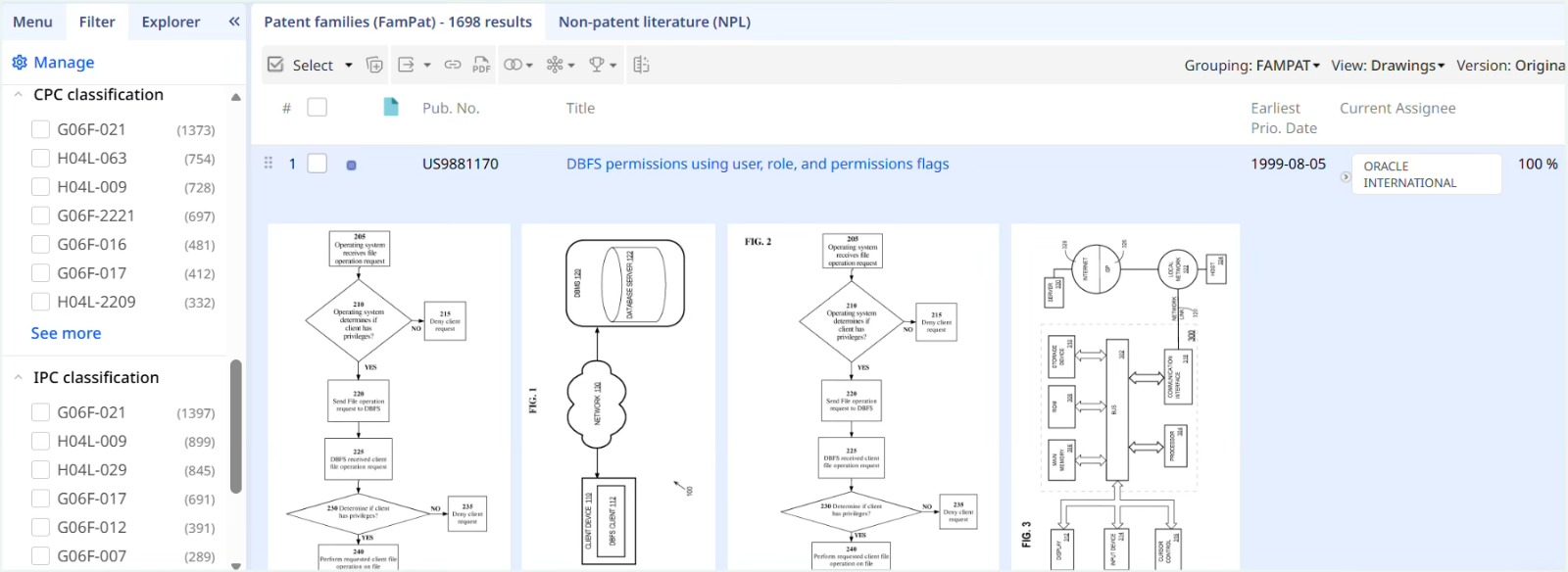
Figure 3.2 presents the key IPC/CPC classifications associated with the defined technologies during the relevant periods.
Based on the identified technology trends, the researcher may then perform targeted searches using historically relevant terminology, core patent classifications, predecessor technical concepts, and the patent portfolios of major industry players active during the relevant period.
The highly relevant references identified through the above trend-based search approach are set out below.
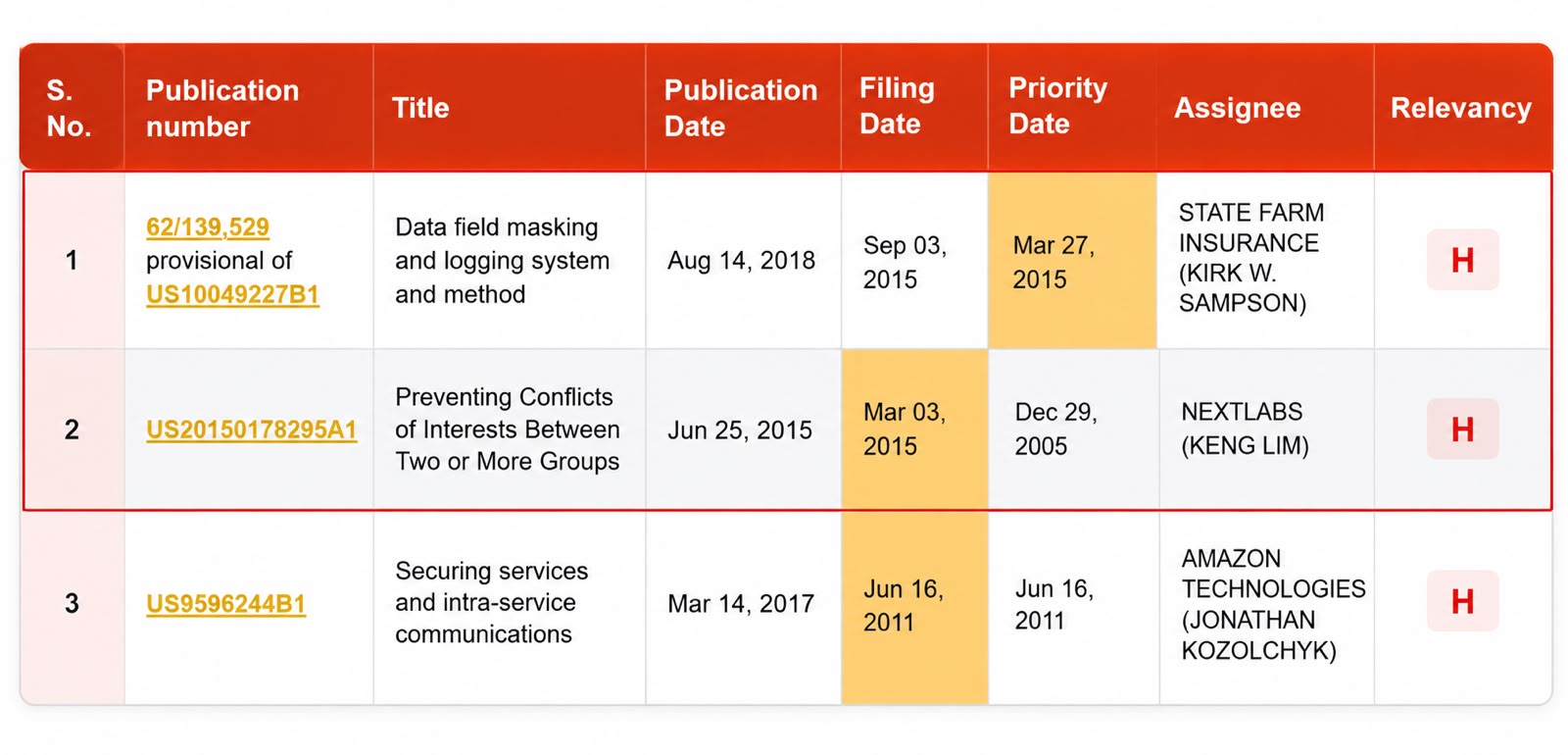
Figure 3.3 presents an overview table of Target Patent C, highlighting the relevant prior-art references at Serial Nos. 1 and 2 identified through classification-based trend analysis, and the reference at Serial No. 3 identified through key-assignee-based trend analysis.
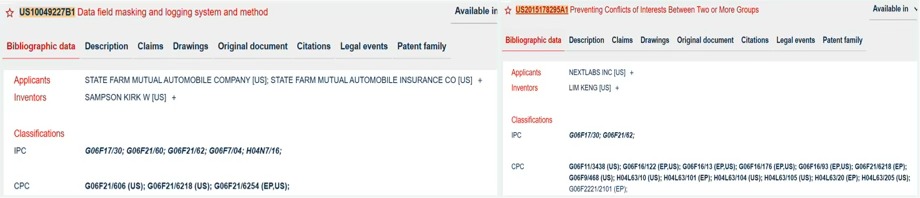
Figure 3.4 presents the relevant prior-art references, including the key classifications identified through trend-based analysis.
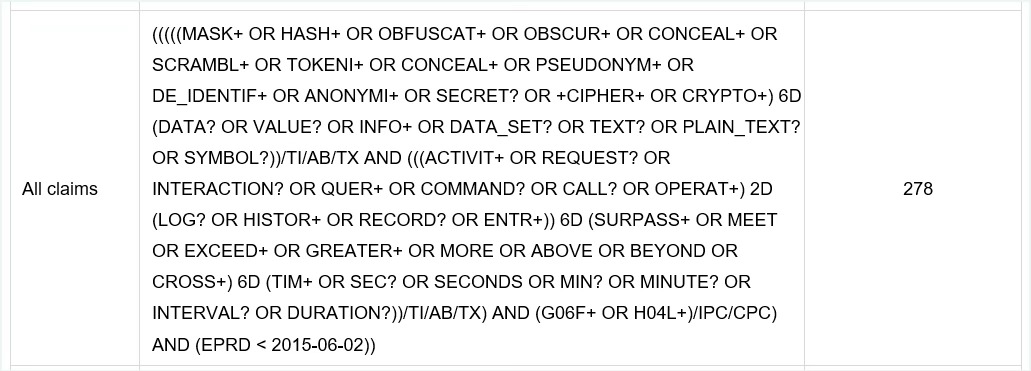
Figure 3.5 presents an exemplary search query formulated using trend-based data to identify relevant prior-art references.
Applying this trend-based analysis led to references that may otherwise be overlooked by searches relying exclusively on the present-day terminology of Target Patent C. The historical search can substitute modern claim terminology with its earlier technical equivalents, predecessor terms, broader functional descriptions, or classification-based concepts. Similarly, examining the patent portfolios of major industry players active during the relevant period can uncover earlier disclosures that employ terminology different from that used in the target patent.
Search Insight: A robust prior-art search should account for time-dependent terminology, classifications, architectures, and industry players, rather than relying solely on the patent language.
U.S. Patent Classification (USPC) Analysis for Older Prior Art
Older U.S. patents may not be effectively retrieved using modern IPC/CPC classifications alone. For historical U.S. prior-art searches, the corresponding United States Patent Classification (USPC) codes should also be identified and investigated.
A comprehensive search should therefore determine the USPC classes and subclasses historically associated with the technical subject matter, particularly those classifications that were used during the relevant filing and examination period. Earlier patents were frequently classified primarily under the USPC system, and their classifications may reflect the terminology, technical architecture, functional relationships, and implementation approaches prevalent at that time.
Worked example: US Classification Codes for Older Patents
An illustrative example based on Target US Patent D, demonstrating how historically relevant USPC classes and subclasses can be identified and searched to uncover older prior-art references that may not be readily retrieved through modern CPC, IPC, or keyword-based searching.
The key question is:
Which USPC classes and subclasses historically captured the same underlying technical function or problem?
The relevant claim limitations should first be abstracted into domain-neutral technical concepts, after which corresponding USPC classes and subclasses can be identified and searched. This approach helps avoid limiting the search to the modern classification assigned to the target patent and can reveal older references that may have been classified under different but technically related USPC categories.
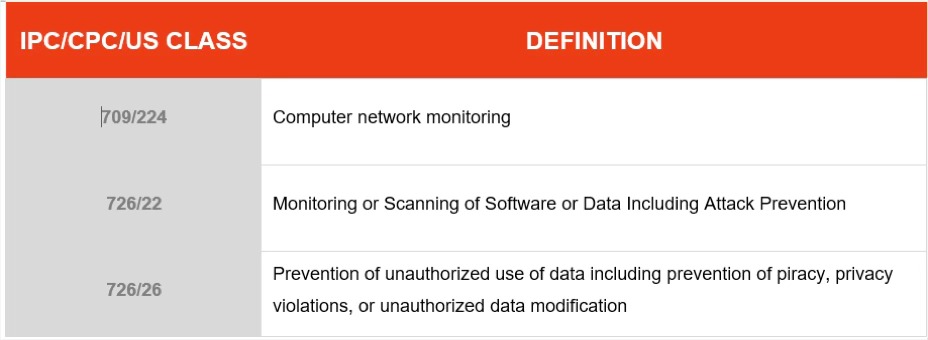
Figure 4.1 presents an exemplary classification table highlighting the shortlisted USPC classes identified as potentially relevant to the defined technology.
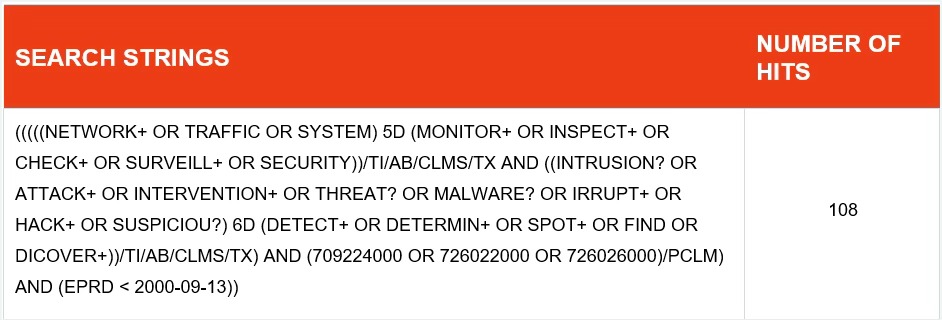
Figure 4.2 presents an exemplary search query formulated using USPC classes to identify relevant prior-art references.
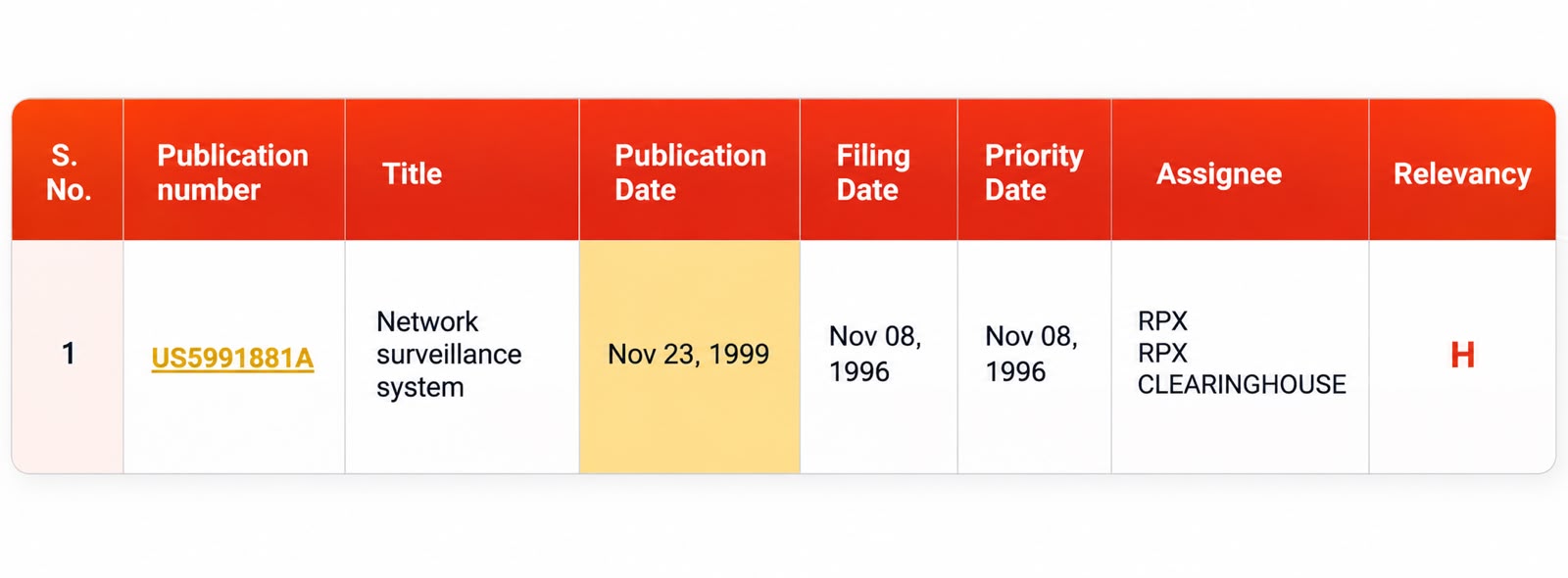
Figure 4.3 presents an overview table of Target Patent D, highlighting the relevant prior-art references identified using the shortlisted USPC codes.

Figure 4.4 presents the relevant prior-art references identified using the shortlisted USPC classifications.
Target Patent D demonstrates the value of leveraging historically relevant USPC classifications. By searching the shortlisted technical USPC code, US5991881A was identified as a potential prior-art reference exhibiting substantial overlap with the target claim, highlighting how US classification-based searching can uncover references that may otherwise be missed.
Search Insight: Searching historically relevant USPC classifications can significantly enhance prior-art discovery for older U.S. patents.
Product and Practical-Implementation Searching
For application-oriented technologies, searching beyond patent literature can provide valuable leads for identifying earlier disclosures and understanding how the claimed technology was practically implemented. Relevant sources may include product-launch announcements, technical demonstrations, user manuals, product datasheets, feature descriptions, technical reviews, teardown analyses, conference demonstrations, archived webpages, and YouTube videos. Such materials can reveal industry terminology, implementation details, component relationships, product timelines, and evidence of when particular technical features became publicly available.
The objective is not necessarily to treat these product materials as standalone prior art, but rather to use them as a search bridge. Information such as product names, manufacturers, component suppliers, technical features, implementation terminology, model numbers, and launch dates can be traced back to patents, technical papers, standards, manuals, regulatory filings, or other dated technical disclosures.
Worked example: Product and Practical-Implementation Searching
An illustrative example based on Target Publication E, demonstrating how product-level and practical-implementation evidence can be used to identify historically relevant technical disclosures and expand prior-art searching beyond conventional patent databases.
The key question is:
Was the claimed functionality already implemented, demonstrated, or publicly described in a commercial or practical product before the relevant priority date?
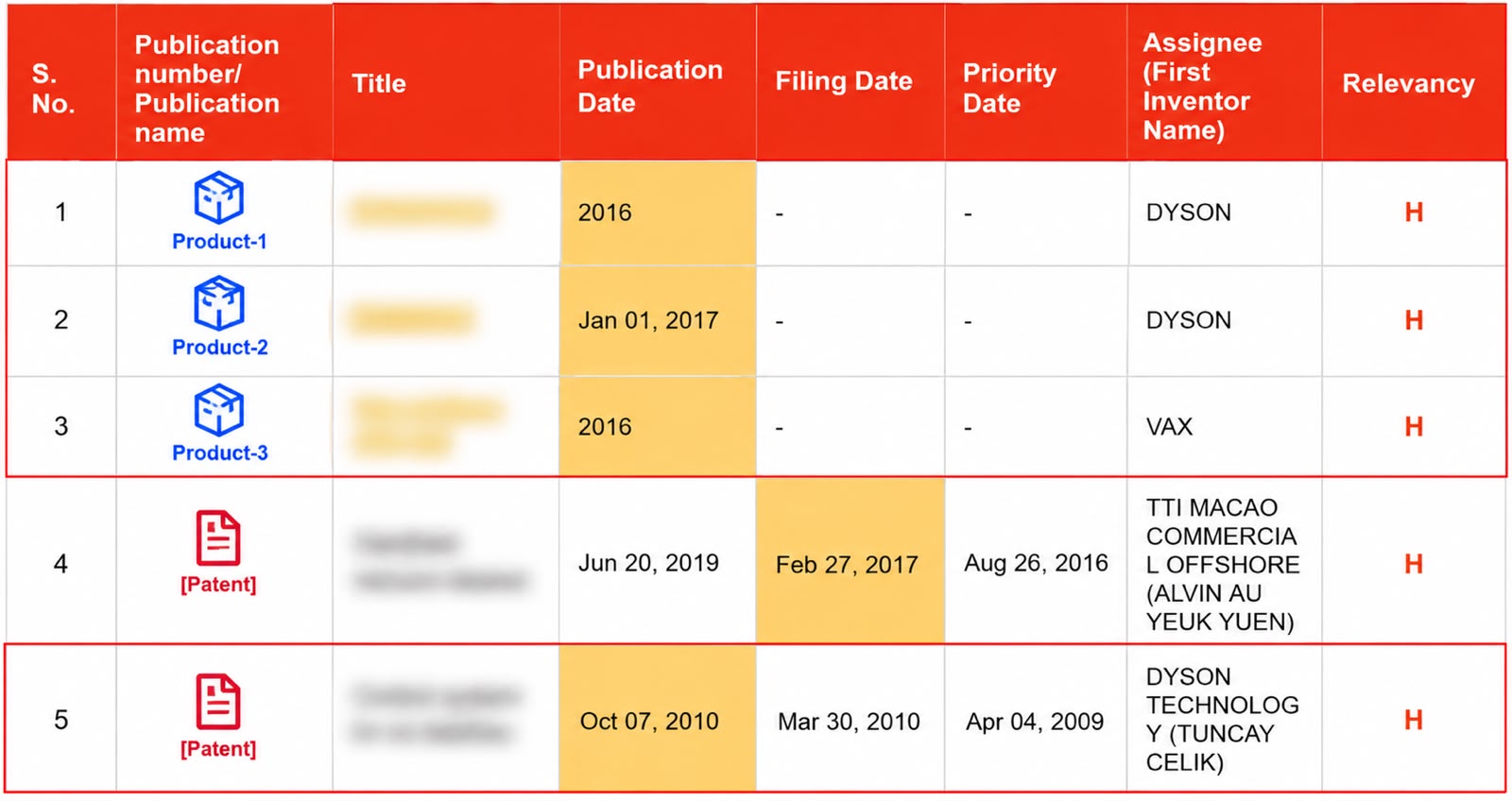
Figure 5.1 presents an overview table of Target Publication E, highlighting the relevant prior-art references at Serial Nos. 1-3 identified through product searching, and the reference at Serial No. 5 identified through research paper and patent cross-searching.
For Target Publication E, the claimed technical concepts can be searched through commercially available products, technical demonstrations, product documentation, and other implementation-oriented sources. Identifying products that incorporated similar functionality can provide useful technical terminology, product identifiers, manufacturers, component relationships, and implementation details. These identifiers were subsequently traced to locate earlier patent (US20100253262A1), technical publications, and manuals.
This approach is particularly valuable where a product or commercial implementation predates the relevant priority date, while the corresponding patent literature uses different terminology or describes the technology from a different technical perspective.
Search Insight: Product and practical-implementation searching can uncover earlier technical disclosures by tracing commercial products, features, and implementation terminology back to dated patents, technical publications, and other public disclosures, thereby expanding prior-art coverage.
Additional Underutilized Search Practices
Before concluding a prior-art search, apply the following additional search practices to challenge general search approaches and uncover references that may otherwise remain overlooked:
- F-Term Searching: Use Japan’s F-term classification system to search technical concepts through detailed viewpoints and themes, particularly where conventional keyword or CPC/IPC searches provide limited coverage.
- Jurisdiction-/Region-Based Searching: Expand searches across relevant jurisdictions and regional patent databases to identify equivalent filings, locally published prior art, under review documents, and disclosures that may not be prominent in a single-country search.
- Citation Chaining: Trace the references cited by key prior-art documents and then examine the citations within those referenced documents to uncover deeper, earlier, or otherwise overlooked prior art.
- Examiner-Missed Techniques: Classification & Keyword Expansion: Identify the overlooked CPC/IPC/USPC classes, synonyms, functional terminology, and alternative keyword combinations to address gaps in examiner search.
Conclusion
A robust prior-art search is not limited to keyword or classification-based searching. It requires a broader search mindset that explores different perspectives, connects multiple search pathways, and continuously builds upon identified references.
- Broaden the search perspective beyond claim keywords, classifications, and the target industry to uncover overlooked prior art.
- Use multiple search pathways by connecting patents, research papers, historical terminology, classifications, and practical implementations.
- Leverage relevant references iteratively, using inventors, products, citations, patent families, and technical terminology as additional search leads.
- Focus on the underlying technical concept, allowing earlier or differently described disclosures to be identified despite differences in terminology or application domain.
“Do not stop at the identified reference—trace the references it relies upon, as the most relevant prior art may often be found one citation deeper.”
Where iCuerious comes in
Conducting a strong prior-art search requires more than simply identifying references—it demands strategic thinking, technical expertise, and rigorous evidence validation. iCuerious employs a structured, multi-phase methodology designed to maximize prior-art discovery while maintaining comprehensive documentation and traceability throughout the search process. Our investigations leverage a dual-layer research infrastructure, combining AI-powered patent intelligence tools with institutional access to leading global patent and non-patent literature databases. Each identified reference is systematically evaluated for technical relevance, publication timing, and claim-level applicability, delivering reliable insights for novelty, invalidity, and patentability assessments.
Talk to the iCuerious team → www.icuerious.com